
Mini Dental Implants in Huntsville, AL
In healthcare, eligibility is often determined by more than age. A person’s overall health and physical resilience can determine whether a treatment is considered safe. Dentistry is no exception. Many patients are told they cannot receive dental implants because their bodies may not tolerate the demands of surgery. But how are these limits defined, and are they still relevant as dental technology continues to evolve? Mini dental implants are changing the answer. Their smaller size and simplified placement process make them a realistic option for people who have been excluded from traditional implant treatment. For patients who have thought that implants are not an option, mini dental implants provide an alternative.
As President and Diplomate of the International Academy of Mini Dental Implants (IAMDI), Dr. Tracie Battle leads with advanced knowledge and extensive experience in making these treatments accessible to patients who once believed implant treatment was out of reach.
Traditional Dental Implants vs. Mini Dental Implants
Dental implants are small titanium posts that we place directly into the jawbone to replace a missing tooth root. After placement, the surrounding bone fuses with the implant in a process known as osseointegration. This process creates a stable foundation for a crown, bridge, or denture. Dental implants help maintain bone structure and improve chewing function by replacing the missing root itself.
There are different types of dental implants, each suited for different needs. The most commonly used options are traditional implants and mini dental implants. Both offer lasting results, but they differ in size, structure, surgical technique, and healing process. These differences affect everything from how we place the implants to how quickly patients can recover and begin using their new teeth.
| Feature | Traditional Implants | Mini Dental Impants |
|---|---|---|
| Size | Approximately 5 mm in diameter | Less than 3 millimeters in diameter |
| Design | 3 components: implant, abutment, and final restoration | Two components: implant with integrated abutment, and final restoration |
| Placement Technique | Involves a surgical procedure that typically includes incisions and sutures | Involves a minimally invasive technique, avoiding incisions and sutures |
| Healing Time | The healing process typically takes several months before the final restoration is placed. | The healing period is generally shorter, and we can place the final restoration much sooner. |
How Do Mini Dental Implants Benefit You?
Minimal Discomfort
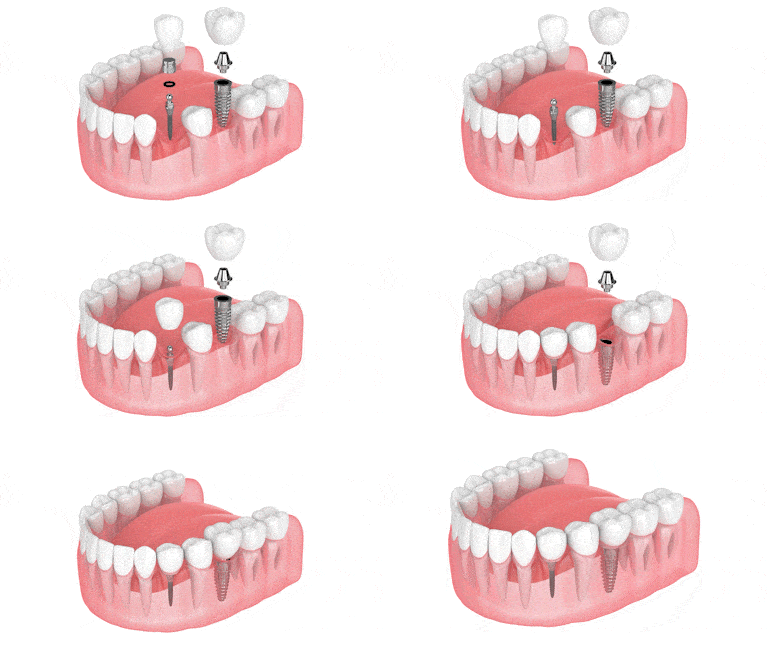
One of the most important benefits of mini dental implants is the minimally invasive technique we use to place them. Because mini implants are smaller in diameter than traditional implants, the procedure requires less disturbance to your natural tissues. This technique allows us to restore your smile with less physical trauma while improving comfort, safety, and overall efficiency.
We typically complete the procedure using only local anesthetic to numb the area. For patients who need additional support, we also offer oral conscious sedation and nitrous oxide. Once the area is numb, we create a small pilot hole through the gum and into the jawbone. Then, we gently place the implant into position.
This method supports faster healing and reduced discomfort. Many patients experience very little swelling or soreness afterward. Because the surrounding tissues remain largely untouched, recovery tends to be quicker, and in some cases, we can place your new teeth on the same day.
Minimal Visits
Mini dental implants often make it possible to complete treatment in fewer visits and in less time overall. One reason we can complete treatment more quickly is that we often place mini dental implants in areas with limited bone without needing to perform a bone graft.
Bone grafting is a surgical procedure that we perform when the jawbone lacks the volume or density needed to support a traditional implant. Once you lose a tooth, the jawbone weakens because it no longer absorbs the pressure of everyday biting and chewing. Over time, the bone in that area becomes thinner and weaker, making it harder to place a standard implant without rebuilding the foundation first.
Traditional implant cases with bone loss often begin with grafting, which extends the timeline and recovery period by several months. When we use mini dental implants, we can usually avoid this step entirely. Their smaller diameter allows us to achieve stability using the existing bone, even when some deterioration has occurred.
By skipping the grafting stage, we simplify the overall process. Patients spend less time in the chair, recover more quickly, and move toward their final restoration with fewer delays.
Minimal Costs
Mini dental implants often come with a lower price tag, and that affordability reflects the overall simplicity of the treatment process. Mini dental implants involve fewer steps than traditional implants, which directly reduces the time, materials, and resources the procedure requires.
We perform a more streamlined procedure that doesn’t rely on complex surgical tools or extended chair time. Because the implant design is more compact, placement is efficient, and we often need fewer components to complete the restoration. In many cases, the final crown or denture can attach directly to the implant without the need for additional parts.
We also avoid extra treatments in many situations. Preparatory procedures, like bone grafting, are often unnecessary with mini implants, which helps reduce both clinical and financial costs.
By minimizing surgical complexity, material use, and the number of visits, we reduce the overall investment required.
Restore Your Smile With Mini Dental Implants in Huntsville, AL
For patients who have been turned away from traditional implants or want a treatment that’s easier and more affordable, mini dental implants offer a practical option. At Smile Center of Huntsville, we provide care that respects your health, comfort, and time.
Contact us today to schedule a free consultation and discover if mini dental implants are the right choice for you.
Frequently Asked Questions
Yes, we can often attach a crown, bridge, or denture to a mini dental implant immediately after placement. In many cases, patients leave our office with functional teeth the same day we place their implants.
This approach is possible because mini implants require a less invasive procedure and can achieve strong initial stability in the bone. When the surrounding bone is healthy and dense enough, we can securely place the restoration right away without waiting for extended healing.
However, we carefully evaluate each case to make sure immediate loading is safe and appropriate. The decision depends on the quality of your bone and how stable the implant is at the time of placement.
Mini dental implants are highly successful. Research shows that about 97% of patients have positive outcomes with this type of treatment. Researchers and dental professionals evaluate success using several criteria. These include implant stability, the health of surrounding bone and gum tissue, the long-term function of the attached restoration, and patient satisfaction.
A successful result typically means there are no complications with the implant, bone loss is minimal, and the restoration continues to perform well over time. With proper care and regular dental visits, they can deliver strong, stable results that improve quality of life.
Yes, mini dental implants can help prevent bone loss in the jaw. They work by taking on the role of natural tooth roots, which normally keep the jawbone healthy through everyday pressure from biting and chewing.
When a tooth is missing, the bone in that area begins to shrink because it no longer receives the stimulation it needs. By placing a mini implant into the jawbone, we reintroduce that stimulation. As the body heals, the bone naturally starts to rebuild and attach to the implant. This process creates a strong bond that supports the implant and keeps the bone stable.