A day with floating dentures can feel like a series of small interruptions. The denture shifts when you speak, lifts when you chew, and never feels as steady as it should. Daily activities begin to feel less comfortable and less predictable. You may find yourself repositioning the denture more often, pausing mid-conversation to regain stability, or adjusting your chewing to prevent it from moving. By evening, relief often comes from one simple action: removing it. That sense of relief is telling.
Dentures should restore comfort, stability, and function. Persistent movement, pressure, or instability often indicates that the fit or underlying support has changed. At Smile Center of Huntsville, we provide solutions using dental implants to improve denture stability, strengthen support, and restore a more secure, comfortable fit.
What Are Floating Dentures?
A floating denture is one that no longer rests securely against the gums. The appliance may slip, rock, or shift during normal activities such as speaking, chewing, or swallowing. The term “floating” comes from the sensation that the denture is moving across the gum tissue rather than staying seated in place.
As denture fit changes, patients frequently notice the following symptoms:
- A noticeable wobble when speaking
- A slight lift or shift when chewing
- Rubbing or irritation along the gums
- Sore or tender spots beneath the denture
- Food collecting under the appliance
- Difficulty biting down with steady pressure
- Jaw fatigue or muscle soreness over time
Many people describe the sensation as “loose,” “shifting,” or “unstable.” These changes often develop gradually, which makes them easy to dismiss at first. Over time, however, even mild movement can become increasingly noticeable and uncomfortable.
What Is the Cause of Floating Dentures?
After teeth are removed, the jawbone slowly begins to shrink through a process known as bone resorption. Dentures depend on the shape of the bone and gum ridge for their fit. As that foundation changes, the denture may lose its snug, secure feel. Increased movement can then lead to friction, inflammation, and additional discomfort, further affecting stability.
A floating denture is a common and expected occurrence over time. It does not mean the denture was made incorrectly or that anything has “failed.” It simply means your mouth has changed.
Fortunately, several solutions can restore comfort and control. A denture reline reshapes the inner surface of the appliance to adapt it to your current gum contours. An adjustment can correct pressure points or bite imbalances. However, for patients seeking greater long-term stability, implant support can anchor the denture more securely, reducing movement.
How Dental Implants Stabilize Your Dentures
A traditional denture relies on suction, adhesives, and the accuracy of its fit to remain in place. While these methods can work well, they do not recreate one critical element of natural teeth: the tooth root.
Natural teeth remain secure because each tooth is anchored beneath the gumline by its root, which extends into the jawbone. That root provides stability, allows you to apply biting pressure, and helps the tooth resist movement. Without that structural anchor, a denture must rest entirely on the gum surface. We use dental implants to restore that missing foundation.
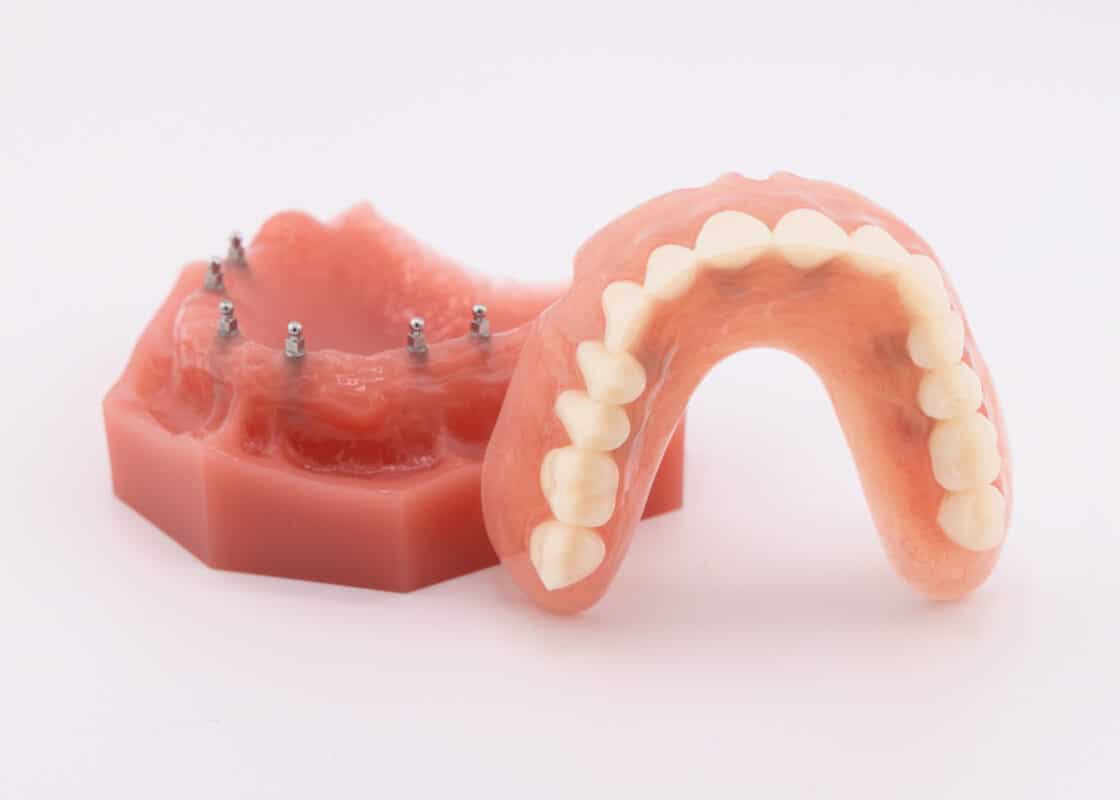
Mini dental implants are small titanium posts that Dr. Battle places directly into the jawbone. Titanium is a biocompatible material, which means the body accepts it safely. Over time, the surrounding bone integrates with the implant through a natural process called osseointegration. As healing progresses, the implant becomes firmly secured within the bone.
Once integrated, the implant functions much like a tooth root and provides a stable anchor beneath the gums. When the denture connects to the implants, the restoration gains a level of retention and support that suction or adhesives alone cannot provide. The result is a denture that feels more secure, resists shifting, and allows for stronger, more controlled biting pressure.
Restore Stability and Comfort to Your Dentures
Floating dentures are often the result of natural changes in the jawbone that affect how your denture fits and functions.
At Smile Center of Huntsville, we offer solutions to improve denture fit, comfort, and security. For those seeking stronger, long-term stability, mini dental implants can anchor the denture more securely and reduce movement.
If your denture feels loose, shifts when you speak or chew, or no longer feels as comfortable as it once did, book a free consultation at Smile Center of Huntsville.