
Dental Bridge in Huntsville, AL
In any team sport, the absence of one player can alter the entire strategy. In baseball, for example, taking the catcher out would shift the diamond: pitchers pull back, runners test the bases, infielders crowd the plate, and the rhythm breaks. Of course, this scenario would never happen in a real game because the lineup is designed to keep every position filled. Your teeth have a similar system. Each one plays a role that keeps chewing, speech, and alignment in sync. Remove a tooth, and the rest start compensating in ways you feel over time. A dental bridge restores the lineup. It fills the space, rebalances the bite, and helps everything function the way it should. At Smile Center of Huntsville, we offer implant-supported solutions that bring lasting strength back to your smile.
What Is a Dental Bridge?
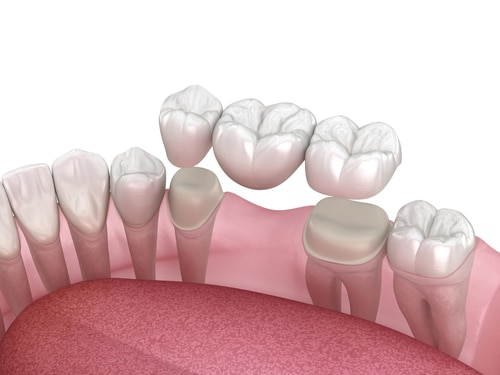
Dental bridges replace one or more missing teeth by anchoring a false tooth in place. Your ideal dental bridge depends on several factors, including how many teeth are missing, where the gap is located, and the health of surrounding teeth and bone. Each bridge type serves a different purpose, and a skilled dentist will guide you through your options to find the most effective solution for your needs.
Traditional Dental Bridge
A traditional dental bridge is one of the most common methods for replacing missing teeth. It spans the empty space with a replacement tooth, called a pontic, that looks and functions like the real thing. To keep it secure, we reshape the teeth on either side of the gap and fit them with dental crowns. These crowned teeth, called abutments, serve as anchors for the bridge. Because the bridge relies on them for strength and stability, we carefully evaluate their health before recommending this option.
Cantilever Bridge
A cantilever bridge is a solution we use when there is only one tooth next to the space where another tooth is missing. Unlike a traditional bridge, which attaches to teeth on both sides of the gap, a cantilever bridge connects to just a single abutment tooth. Because all the pressure is supported on one side, we usually recommend it only in areas of the mouth that don’t handle heavy chewing.
Cantilever bridges are most effective for front teeth or places in the smile line where appearance matters more than bite strength.
Maryland Bridge
A Maryland bridge, also known as a resin-bonded bridge, takes a more conservative approach to tooth replacement. Instead of using full crowns for support, we secure the bridge with a metal or porcelain framework that has small “wings” bonded to the back of the neighboring teeth.
This design preserves more of your natural tooth structure, which makes it a good choice for replacing front teeth. Because the surrounding teeth don’t need as much alteration, it appeals to patients who prefer a minimally invasive solution.
Implant-Supported Bridge
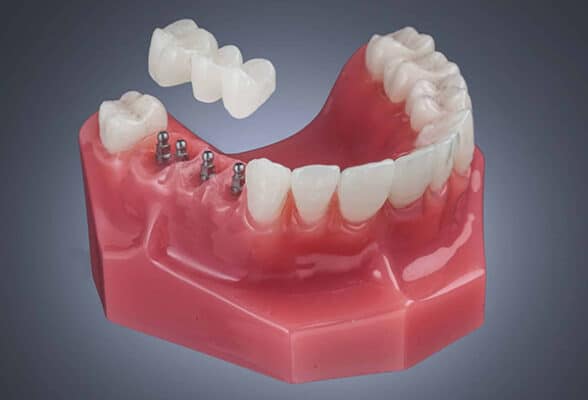
An implant-supported bridge is an advanced solution we use for patients missing several teeth because it doesn’t depend on neighboring teeth for support. Instead, we place mini dental implants or traditional dental implants directly into the jawbone, and these implants act like artificial roots to hold the bridge securely in place.
This method offers more strength and stability than other bridge designs, providing the closest experience to natural teeth. Sometimes we place one implant for each missing tooth, while in other cases we position implants at each end and suspend replacement teeth between them. We often recommend this option when multiple teeth are missing or when nearby teeth aren’t strong enough to support a traditional bridge.
What Are the Benefits of a Dental Implant Bridge?
Implant-supported bridges offer several long-term advantages. If you’re deciding between traditional and implant options, it’s worth understanding how implants protect your overall oral health and improve your quality of life.
You Keep Your Healthy Teeth Intact
Traditional bridges require us to reshape the healthy teeth next to the gap. These neighboring teeth anchor the bridge, even if they’re perfectly healthy. With an implant-supported bridge, we don’t need to alter your natural teeth. The implants are placed directly into your jaw, allowing us to preserve the strength and integrity of the surrounding teeth.
You Protect the Bone That Supports Your Smile
When a tooth is missing, the jawbone beneath it no longer receives the stimulation it once got from the tooth root. Without that regular stimulation, the bone can begin to shrink over time. This gradual bone loss can change the shape of your face and affect the alignment of your bite.
Traditional bridges sit on top of the gums and do not interact with the jawbone. As a result, they can’t stop this bone loss from happening. Implant-supported bridges work differently. Because we place dental implants into the jaw, they function like artificial roots, providing the stimulation needed to preserve bone density and support your natural facial structure.
You Gain More Stability and Function
Since implant bridges are anchored securely in your jaw, they feel more like real teeth. You can chew more effectively, speak with greater confidence, and enjoy day-to-day comfort without relying on other teeth for support. That added stability can make a big difference in how natural your smile feels.
You Benefit from Long-Term Durability
Traditional bridges may last five to fifteen years before needing replacement. Implant-supported bridges tend to last much longer with proper care. While the initial cost is higher, the long-term value often outweighs the investment. Fewer replacements and fewer future procedures can mean more savings and less time spent in the dental chair.
Explore Your Options for a Dental Bridge Today
At Smile Center of Huntsville, we offer several types of dental bridges. Each option is selected based on your specific needs, your goals, and how your mouth functions as a whole. Our team will guide you through the process, explain what to expect, and recommend the most appropriate solution to restore your smile. Contact us today to schedule a consultation and learn which type of dental bridge is right for your smile.
Frequently Asked Questions
Most dental bridges stay in place permanently. We bond them to your natural teeth or dental implants so they function just like your real teeth. Because these bridges are fixed, you don’t have to take them out at night or worry about them shifting. You’ll enjoy a stronger bite and a more natural feel than with removable options.
To keep your bridge and gums healthy, brush with a soft-bristle toothbrush twice a day. You should also rinse with an antibacterial mouthwash to remove bacteria and reduce the risk of gum disease. If you have trouble using floss under the bridge, consider using a water flosser instead. It directs a strong stream of water under the bridge to wash away food and plaque.
We also recommend that you schedule professional cleanings every six months. We can reach areas that are difficult to clean at home and make sure your bridge stays in good shape.
The cost of a dental bridge depends on the type of bridge, the number of teeth being replaced, and any prep work needed before placement. When you visit us for a consultation, we’ll talk about your goals, review your treatment options, and provide a personalized estimate. We’ll also go over our financing options to help you fit your care into your budget.